A Bankart tear is a common shoulder injury that can lead to recurrent dislocations and persistent discomfort. In this post, we’ll review what a Bankart tear is, common causes, symptoms to watch for, and the most effective treatments available.
Key Takeaways
- A Bankart tear is a shoulder soft tissue injury that destabilizes the joint, often caused by traumatic dislocations.
- Symptoms include shoulder pain, instability, and mechanical sensations (catching, locking), which can disrupt daily life.
- Treatment ranges from non-surgical methods like physical therapy to surgical options, with rehabilitation playing an important role in recovery.
Understanding the Bankart Tear
A Bankart tear involves damage to the anterior glenoid labrum, a structure made of fibrocartilage that stabilizes the shoulder joint. The glenoid labrum acts like a suction cup, deepening the shoulder socket and providing an attachment point for ligaments. When torn, the shoulder loses stability, increasing the risk of recurrent dislocations.
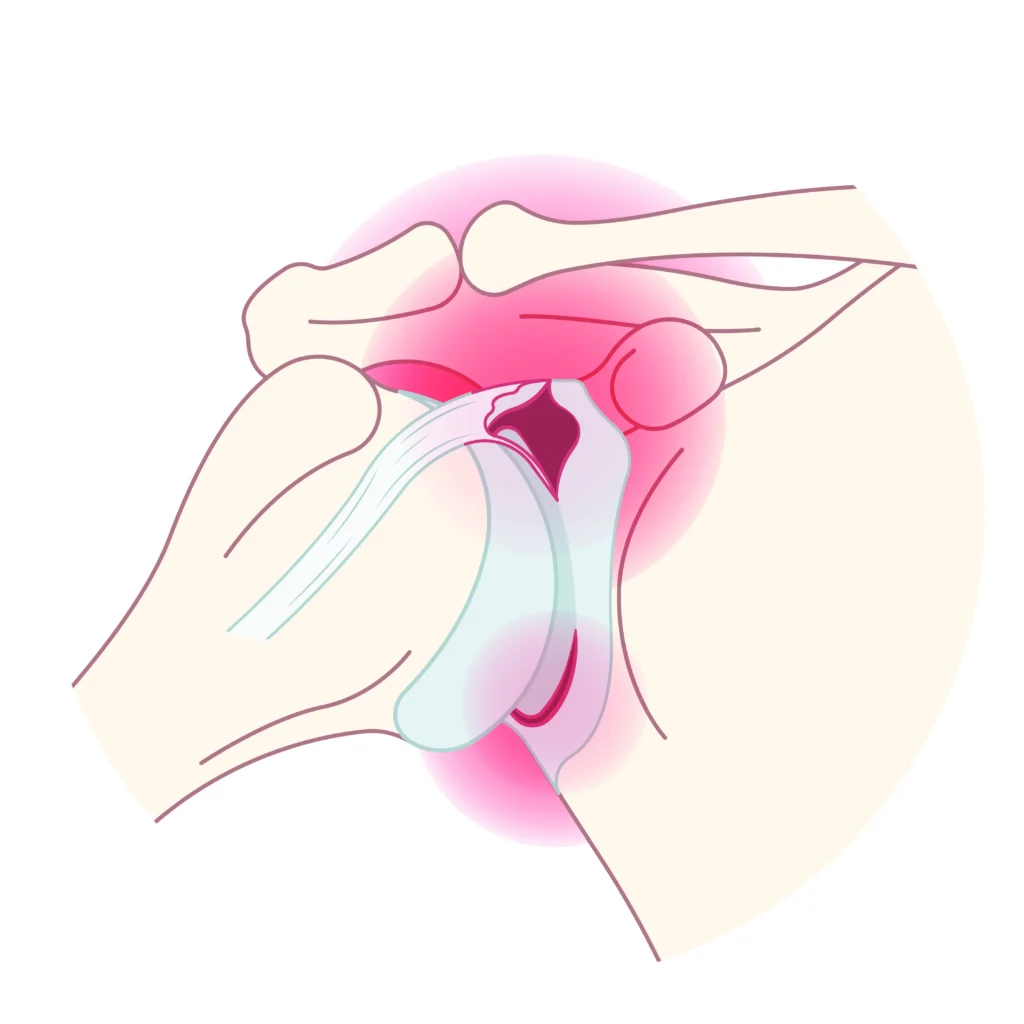
This unsteadiness can impact not just athletic performance but also basic daily activities. Early diagnosis and treatment are essential to prevent long-term complications.
Causes of a Bankart Tear
A Bankart tear most commonly results from traumatic shoulder dislocations, which may occur during falls, accidents, or high-impact sports.
Sports such as volleyball, tennis, and handball are particularly high-risk as they require repetitive overhead motions that stress the shoulder. These activities can progressively weaken the labrum, increasing the risk of dislocation. Beyond sports, everyday activities involving overhead motions can also contribute to the gradual wear and tear of the labrum.
This injury usually involves the shoulder being externally rotated and abducted during a dislocation event. This position puts immense strain on the glenoid labrum and the surrounding ligaments, leading to tears. In some cases, the humeral head might forcefully impact the labrum, causing a bony Bankart lesion where part of the glenoid bone breaks off.
Awareness of these causes allows individuals to take proactive measures to protect their shoulders.
Symptoms and Diagnosis of Bankart Tears
Recognizing the symptoms of a Bankart tear is the first step toward treatment. Patients often describe shoulder pain, instability, and mechanical symptoms.
Early consultation with an experienced orthopedic surgeon is important for a proper diagnosis and to prevent further complications.
Recognizing Symptoms
The symptoms of a Bankart tear can vary, but most patients experience shoulder pain. Many also describe a sensation of instability in the shoulder, feeling as though it might “give way” during certain movements. These symptoms may be particularly noticeable during activities that involve lifting or reaching overhead, making daily tasks challenging. Mechanical symptoms such as catching, locking, or popping sensations in the shoulder blade are also common.
Bankart tear symptoms can substantially affect quality of life, limiting participation in sports and interfering with simple tasks like reaching for an item on a high shelf. Early recognition of symptoms and prompt medical evaluation are key to effective management and prevention of further damage.
Diagnostic Techniques
Accurate diagnosis of a Bankart tear requires a comprehensive approach combining a physical examination with imaging studies. While a physical examination provides valuable information that may suggest a labral tear, it’s often insufficient for a definitive diagnosis.
X-rays are usually the first step in the imaging diagnostic process, ruling out fractures and other bony abnormalities. Following the X-ray, your doctor may recommend magnetic resonance imaging (MRI). MRIs and MR-arthrograms can reveal detailed information about the soft tissues, highlighting tears, effusions, and other abnormalities. In cases where high sensitivity and specificity are needed, MR-arthrograms are preferred, offering a clearer picture of labral tears and associated injuries.
Treatment Options for Bankart Tears
Bankart tear management includes both non-surgical and surgical options, depending on the severity of the injury and the patient’s lifestyle. A personalized treatment strategy helps patients follow the most suitable path for their needs.
Non-Surgical Treatments
Non-surgical treatments for a Bankart tear focus on rest, immobilization, and physical therapy. These methods are particularly effective for patients older than 30 who do not exhibit significant instability and do not engage in high-risk activities.
It’s important to note that untreated Bankart tears can lead to increased susceptibility to shoulder dislocations. Therefore, even if the tear does not require surgical intervention, a comprehensive rehabilitation program is essential to restore shoulder function and prevent future injuries. For Bankart tears, rehabilitation generally focuses on maximizing dynamic stability, improving scapula positioning, and enhancing neuromuscular control.
Surgical Interventions
When conservative treatments are not sufficient, arthroscopic and open surgical options come into play.
Arthroscopic Bankart repair is a minimally invasive procedure that involves reattaching the torn labrum to the glenoid bone using small anchors and sutures. This procedure provides several advantages over open surgery, such as smaller incisions, less post-operative pain, and quicker recovery times.
During the surgery, the surgeon visualizes the torn labrum and surrounding soft tissues using a small camera. In some cases, adjunctive surgical procedures may be necessary to address bone loss or other pathologies to improve the stability of the shoulder following the repair.
The choice between arthroscopic and open surgery depends on the severity of the injury and the patient’s specific needs. Your orthopedic surgeon will recommend the best approach based on a thorough evaluation of your condition.
Rehabilitation and Recovery
Adherence to a structured rehabilitation plan is essential to restore shoulder function while minimizing the risk of recurrent dislocations.
Post-Surgery Rehabilitation Phases
Following surgery, the rehabilitation process begins with shoulder immobilization using a sling for several weeks to protect the healing labrum. Physical therapy typically begins five days post-operation, focusing on gentle exercises to restore range of motion without stressing the repair.
During the first six weeks, movement restrictions are enforced, including no external rotation beyond neutral. As healing progresses, patients can gradually begin active-assisted exercises and may discontinue the sling if approved by their doctor.
Strengthening exercises are typically introduced around 12 weeks post-surgery, aiming to restore full shoulder function over the following months.
Expected Recovery Timeline
Patients usually see significant improvement in shoulder motion within eight weeks post-surgery. Gradual return to normal activities ensures the shoulder heals properly and regains its range of motion.
Most individuals can return to contact sports by the six-month mark, provided they have achieved appropriate strength and conditioning. Adhering to the rehabilitation protocol and collaborating with a physical therapist ensures a smooth and successful recovery.
Long-Term Prognosis
The long-term prognosis for patients with a Bankart tear is generally positive, with studies showing a high percentage returning to sports.
Arthroscopic techniques demonstrate particular success in restoring athletic capability. The advantages of arthroscopic procedures include anatomical restoration, selective soft tissue tensioning, and improved range of motion.
Prevention and Education
Preventing Bankart tears involves strength training focused on shoulder stability and proper technique during sports activities. Athletes should be educated on the importance of gradual progression in training intensity to minimize injury risk.
Education should also cover the mechanisms behind shoulder injuries, treatment methods, and the importance of physical therapy. Wearing protective gear during sports can further reduce the risk of Bankart tears.
Understanding these preventive measures allows individuals to better protect themselves from chronic shoulder instability.
Enhancing Patient Outcomes
Achieving an optimal outcome generally requires a coordinated approach among orthopedic surgeons, physical therapists, and sports medicine specialists. This team-based approach enhances communication and care collaboration throughout recovery phases, ultimately improving patient satisfaction and functional results.
Summary
Every step from recognizing the causes and symptoms to navigating the diagnostic process and exploring treatment options is key to effective management of Bankart tears. Rehabilitation plays an important role in recovery, helping patients regain full shoulder function and return to their daily activities and sports.
The journey through Bankart tear recovery can be challenging, but with the right knowledge and support, it is entirely manageable. By adhering to a structured rehabilitation plan and working closely with an interprofessional healthcare team, patients can achieve excellent outcomes and return to their active lifestyles.
Frequently Asked Questions
What is the difference between a labrum and a Bankart tear?
The labrum refers to a cartilage structure in the shoulder joint, while a Bankart tear specifically refers to an injury to the anterior labrum, often caused by shoulder dislocation.
What is a Bankart tear?
A Bankart tear is a soft tissue injury to the shoulder’s anterior labrum. It often undermines shoulder stability and commonly occurs alongside a shoulder dislocation.
What are the common symptoms of a Bankart tear?
Common symptoms of a Bankart tear are shoulder pain, recurrent instability, and mechanical issues such as catching, locking, or popping sensations. Recognizing and seeking medical attention for these symptoms early can help prevent further complications.
How is a Bankart tear diagnosed?
A Bankart tear is diagnosed through a combination of physical examination and imaging studies, including X-rays, MRIs, and MR-arthrograms.
What are the treatment options for Bankart tears?
The primary treatment options for Bankart tears include non-surgical methods like rest, immobilization, and physical therapy, along with surgical interventions such as arthroscopic Bankart repair. Treatment selection is based on injury characteristics and patient lifestyle.