Experiencing aching elbow joints at night can be a disruptive and frustrating issue. This nocturnal pain is not merely an inconvenience; it can also be a signal from your body that warrants evaluation. In this post, we’ll explore the potential causes of nighttime elbow discomfort, the diagnostic process, and the range of effective treatment options available.
Key Takeaways
- The most frequent causes of aching elbow joints at night are tendinitis (Tennis or Golfer’s Elbow), ulnar nerve entrapment (Cubital Tunnel Syndrome), and various forms of arthritis.
- Pain may worsen at night because of sustained elbow flexion during sleep, which can compress nerves and irritate inflamed tendons or joints.
- Simple measures such as adjusting your sleeping position, using a brace or splint to keep the elbow straight, and applying ice may help offer immediate relief.
- Depending on the cause, effective treatment plans range from conservative approaches like physical therapy and anti-inflammatory medication to advanced options.
Why Does Pain Worsen at Night?
Many individuals report that their elbow pain is manageable during the day but becomes significantly worse after they settle in for the evening. This phenomenon is a common characteristic of several orthopedic conditions. Understanding why pain may intensify at night can help you take proactive steps toward relief.
Positional Factors and Nerve Compression
One reason for the increase in discomfort may relate directly to your sleeping posture. Most people naturally sleep with their elbows bent. This position, known as elbow flexion, can be problematic for two main reasons. First, it places tension on the tendons and muscles around the joint. Second, it can compress the ulnar nerve.
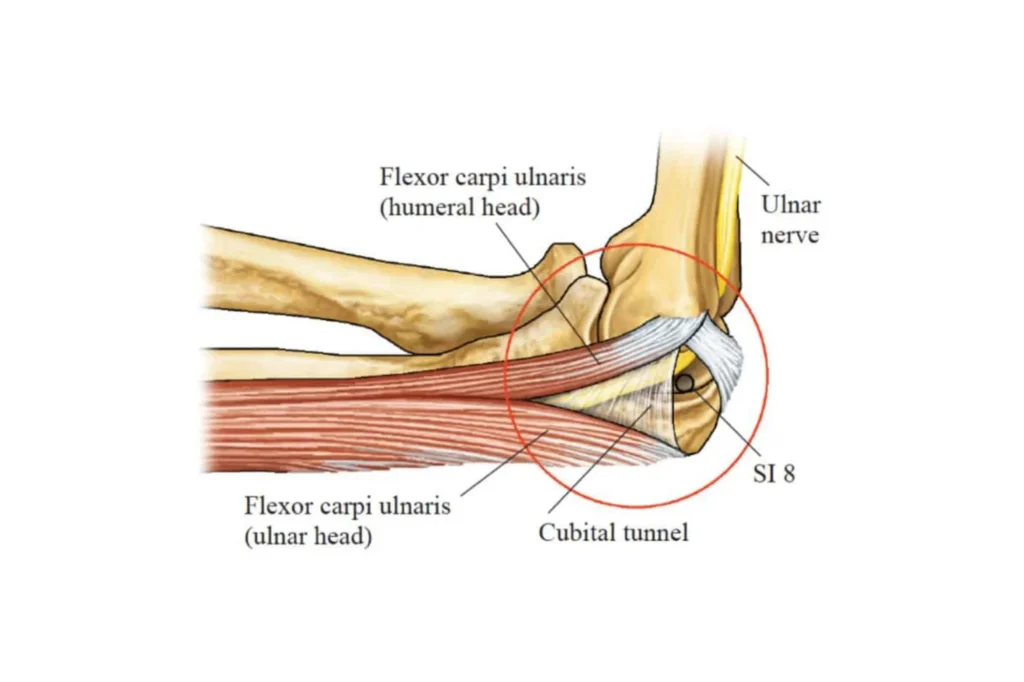
The ulnar nerve travels through a narrow tunnel on the inside of your elbow, often called the “funny bone” area. When you bend your elbow for an extended period, this nerve may be stretched and compressed. This compression can lead to numbness, tingling, and a deep, aching pain that radiates into the forearm and hand.
Inflammatory Processes and Circadian Rhythms
Inflammation plays a role in many causes of elbow pain. Conditions like tendinitis involve inflammation of the tendons. During the day, movement and activity help circulate fluids and reduce the pooling of inflammatory substances. When you are still and resting at night, this circulation may slow down.
The body’s natural circadian rhythm also influences pain perception. Cortisol, a natural anti-inflammatory hormone, typically peaks in the morning and is at its lowest levels late at night. This drop in natural anti-inflammatory protection can allow inflammation to surge, making the underlying pain more noticeable and intense during the night and early morning hours.
Common Causes of Aching Elbow Joints at Night
The elbow joint is a complex structure of bone, cartilage, ligaments, and tendons. Pain in this area can stem from a variety of sources, ranging from overuse injuries to nerve issues and degenerative conditions.
Tendinitis: Tennis Elbow and Golfer’s Elbow
Tendinitis, or tendon inflammation, is a common cause of chronic elbow pain.
- Lateral Epicondylitis (Tennis Elbow): This condition affects the tendons on the outside of the elbow. It can be caused by repetitive wrist and arm motions, such as gripping, lifting, or typing. The pain often radiates from the outside of the elbow down the forearm.
- Medial Epicondylitis (Golfer’s Elbow): This involves the tendons on the inside of the elbow. It is typically caused by repetitive wrist flexion and gripping. This pain is felt on the inner side of the elbow and can extend into the wrist.
Ulnar Nerve Entrapment (Cubital Tunnel Syndrome)
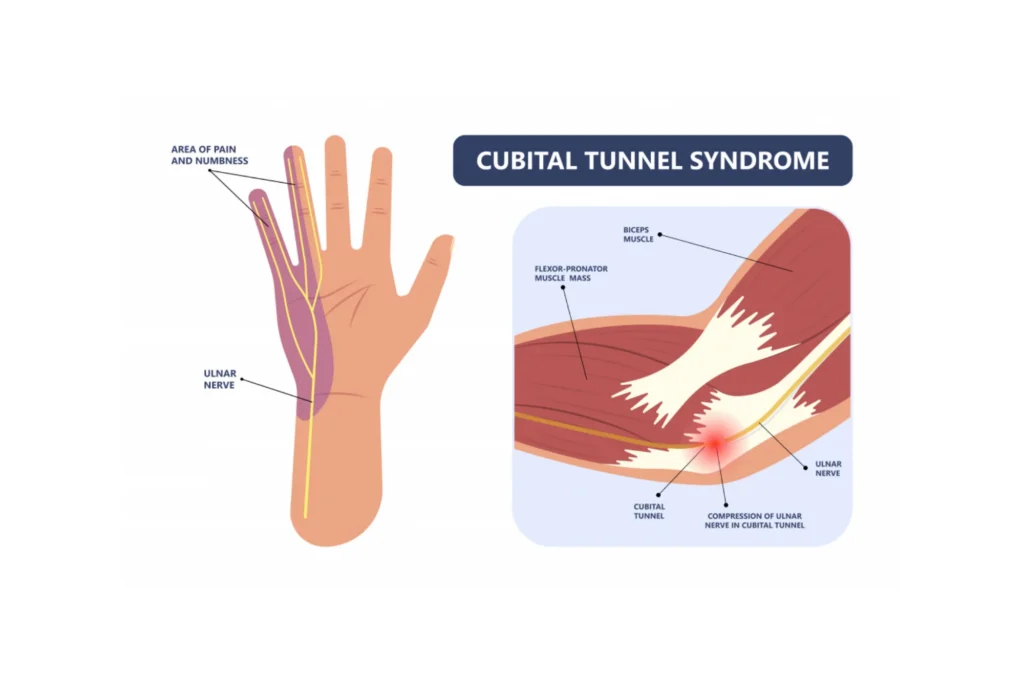
Cubital tunnel syndrome occurs when the ulnar nerve becomes compressed or irritated as it travels through the cubital tunnel at the elbow. Patients commonly experience numbness or tingling in the ring and little fingers, along with a deep ache or burning sensation on the inside of the elbow. Symptoms often worsen at night, especially when sleeping with the elbow bent, which can trigger a “pins and needles” feeling or even a sharp ache.
Osteoarthritis and Inflammatory Arthritis
Arthritis involves the breakdown of cartilage within the joint, leading to bone-on-bone friction and inflammation. While less common in the elbow than in the knee or hip, it can be a source of chronic pain.
- Osteoarthritis (OA): This is the “wear-and-tear” form of arthritis. It typically affects older individuals or those with a history of elbow trauma or repetitive heavy use. The pain is often dull and aching, and it may be accompanied by stiffness.
- Inflammatory Arthritis (e.g., Rheumatoid Arthritis): These systemic conditions cause the body’s immune system to attack the joint lining. The resulting inflammation is often cyclical, and the pain and stiffness are frequently worse in the morning.
The Diagnostic Process: Pinpointing the Source of Discomfort
When aching elbow joints at night begin to interfere with your quality of life, a professional orthopedic evaluation may be the next step. This process typically involves a detailed patient history, a focused physical examination, and, when necessary, advanced imaging studies.
The diagnostic journey begins with a thorough discussion of your symptoms. This may cover characteristics of the pain, when it occurs, aggravating factors, and associated symptoms. During the physical examination, your doctor may press on areas of the elbow to check for tenderness and test range of motion.
In many cases, the diagnosis can be made based on the history and physical exam alone. However, imaging studies may be used to support the diagnosis or rule out other possible causes.
- X-rays: These images show the bones and can reveal signs of arthritis, fractures, or bone spurs.
- Magnetic Resonance Imaging (MRI): An MRI provides detailed images of soft tissues, including tendons, ligaments, and cartilage.
- Ultrasound: This test uses sound waves to create real-time images of soft tissues.
- Nerve Conduction Studies (NCS) and Electromyography (EMG): If nerve entrapment is suspected, these tests measure how well electrical signals travel through the nerves and muscles.
Treatment Strategies for Aching Elbow Joints at Night
The treatment for aching elbow joints at night is highly dependent on the underlying cause and the severity of the symptoms.
Conservative Management: The First Line of Defense
For many patients, initial treatment focuses on reducing inflammation, managing pain, and modifying activities. Exact treatment options may vary based on the diagnosis.
Activity Modification and Rest
- Identify Triggers: Determine which daily activities or sleeping positions aggravate your elbow.
- Ergonomic Adjustments: For tendinitis, this might involve adjusting your computer setup, changing your grip on tools, or using lighter equipment for sports.
- Nighttime Bracing: Wearing a splint or brace at night keeps the elbow straight, which may help prevent the ulnar nerve from being stretched and compressed.
Medications and Injections
- Nonsteroidal Anti-Inflammatory Drugs (NSAIDs): Over-the-counter medications may be used to help reduce pain and inflammation.
- Platelet-Rich Plasma (PRP) Injections: PRP therapy for elbow conditions involves drawing a small amount of your blood, processing it to concentrate the platelets, and injecting the concentrated solution into the injured tendon. Platelets contain growth factors that may help stimulate the body’s natural healing process.
Physical Therapy (PT)
Physical therapy is a component of recovery for most elbow conditions. A physical therapist will design a program to strengthen the muscles around the elbow, improve flexibility, and correct movement patterns.
Advanced Treatment: Surgical Options
When elbow pain continues despite months of conservative treatment, arthroscopy may be an option. This minimally invasive procedure uses a small camera and specialized instruments inserted through tiny incisions, allowing the surgeon to treat the problem while preserving surrounding tissue.
Arthroscopy may be used to address several causes of pain. For tendinitis, the surgeon may remove damaged tendon tissue to encourage healthy healing. It is also commonly used to treat arthritis, where loose bodies, bone spurs, and inflamed tissue may be cleaned out to help reduce pain and improve motion. For some procedures and conditions, however, open surgery may be recommended.
Summary
The experience of aching elbow joints at night is a common orthopedic issue. It frequently stems from mechanical issues like ulnar nerve compression due to sleeping posture or inflammatory conditions like tendinitis and arthritis. Treatment options are varied, ranging from nighttime bracing and physical therapy to injections and surgical procedures.
Frequently Asked Questions
Is it normal for elbow pain to only happen at night?
It is quite common for elbow pain to be most noticeable or severe at night. This is often due to the sustained bending of the elbow during sleep, which can compress the ulnar nerve or increase tension on inflamed tendons.
When is surgery necessary for elbow pain?
Surgery may be considered when conservative treatments have failed to provide relief, there is severe, progressive nerve compression causing muscle weakness, or there is significant structural damage. The decision to proceed with surgery is always made collaboratively between the patient and an experienced orthopedic surgeon.
Does arthritis cause elbow pain at night?
Yes, both osteoarthritis and inflammatory arthritis can cause elbow pain at night. The pain is often due to the joint stiffening up during periods of inactivity. Inflammatory arthritis, in particular, may cause morning stiffness and nocturnal pain due to the body’s natural inflammatory cycles.