Pitching elbow problems represent some of the most common injuries affecting baseball and softball players today. Whether you’re a recreational player or a competitive athlete, understanding these conditions can help you recognize symptoms early and seek appropriate care. The repetitive overhead throwing motion places stress on the elbow joint, potentially leading to various injuries that can sideline athletes for extended periods. In this post, we’ll explore common pitching elbow problems, their causes, treatment options, and prevention strategies.
Key Takeaways
- Pitching places significant stress on the elbow’s ligaments, tendons, and growth plates, particularly the ulnar collateral ligament (UCL).
- Common conditions include UCL tears, medial epicondylitis, and ulnar nerve issues.
- Conservative treatments, including rest, physical therapy, and modified throwing programs, often provide effective relief.
- Surgical intervention may become necessary when conservative measures fail or in cases of complete ligament tears.
The Anatomy of a Pitcher’s Elbow
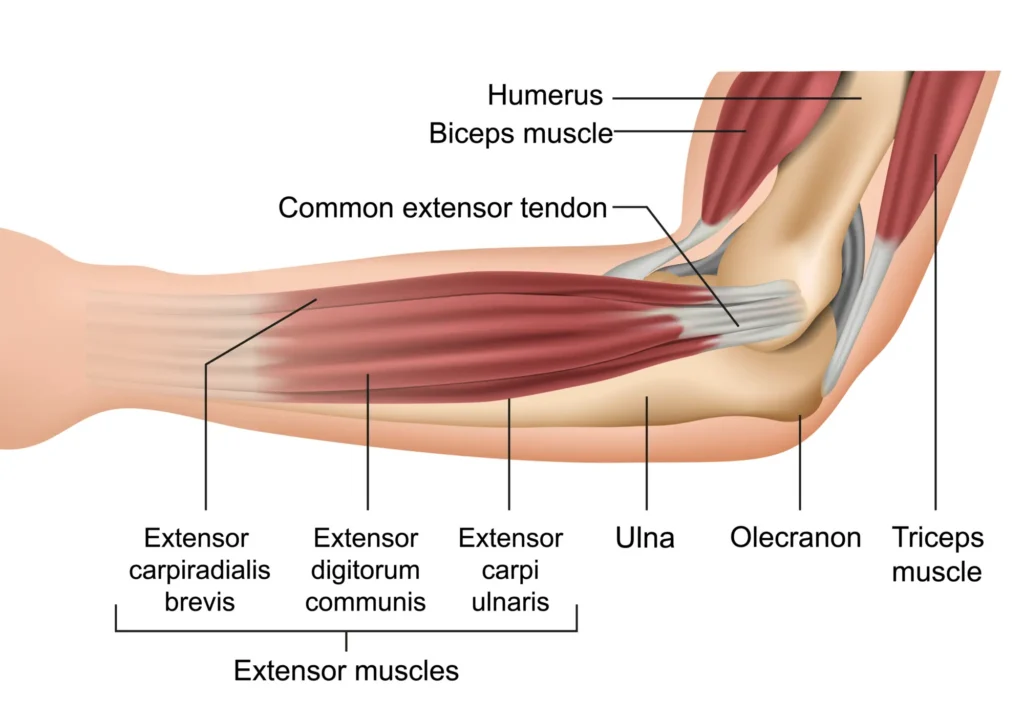
Understanding elbow anatomy helps explain why pitching elbow problems develop. The elbow joint connects three bones: the humerus in the upper arm, and the radius and ulna in the forearm. The ulnar collateral ligament (UCL) runs along the inner elbow and serves as a stabilizer during throwing. This ligament experiences significant stress with each pitch, particularly during the late cocking and acceleration phases, when valgus forces across the elbow are at their highest.
Muscles and tendons attach around the elbow to control movement and provide stability. The flexor-pronator muscle group originates from the inner elbow and helps generate throwing power. The ulnar nerve runs behind the inner elbow in the cubital tunnel, a narrow passageway where it can become compressed or irritated. In younger athletes, growth plates remain open until skeletal maturity, creating vulnerable areas susceptible to repetitive stress damage.
Common Pitching Elbow Problems
Ulnar Collateral Ligament Injuries
UCL injuries represent perhaps the most well-known pitching elbow problem. The UCL can develop small tears or progress to complete ruptures. Pitchers with UCL damage often experience inner elbow pain during or after throwing, decreased velocity, and reduced accuracy. Elbow instability might occur during the throwing motion.
These injuries typically result from cumulative stress over time, though acute tears can happen during a single throw. The UCL stretches with each pitch, and this repetitive loading may exceed the ligament’s healing capacity. Year-round pitching without adequate rest may increase injury risk.
Medial Epicondylitis
Medial epicondylitis, sometimes called pitcher’s or golfer’s elbow, involves tendon inflammation or degeneration at the inner elbow. This condition can develop gradually from overuse of the flexor-pronator muscles during throwing. Athletes typically experience pain in the inner elbow that may radiate down the forearm. Gripping and wrist flexion movements can aggravate symptoms. Rest and rehabilitation often lead to improvement, though recovery may take several months.
Little League Elbow
Little League elbow most commonly involves the growth plate on the inner elbow. Repetitive throwing stress can damage or separate this growth plate. Young athletes may experience inner elbow pain, swelling, and limited range of motion.
This injury highlights the importance of age-appropriate pitch counts for developing athletes. Growth plates in younger players are more vulnerable than mature bone. Many youth baseball and softball organizations publish pitch-count and rest guidelines designed to help protect developing arms.
Ulnar Nerve Problems
The ulnar nerve can become compressed or irritated in pitchers. Athletes may experience numbness or tingling in the ring and small fingers, and grip weakness might develop. Some pitchers notice symptoms worsen during or after throwing. The nerve can be affected by surrounding inflammation or direct compression in the cubital tunnel. In some cases, the nerve may move out of position during elbow flexion, creating irritation.
Understanding the Mechanics Behind Pitching Injuries
The pitching motion generates enormous forces across the elbow joint. Research suggests that the forces placed across the elbow during pitching can be very high and may approach the UCL’s limits, especially with fatigue or inefficient mechanics. The body relies on surrounding muscles and proper timing to protect the ligament. When mechanics break down or fatigue sets in, injury risk can increase.
The throwing motion involves several phases creating different elbow stresses. During late cocking, the arm rotates backward to maximum extent. The acceleration phase follows, generating tremendous forces as the arm rapidly rotates forward. Deceleration requires muscles to slow the arm after release, and follow-through completes the motion.
Poor mechanics may increase stress on vulnerable structures. Dropping the elbow, opening the shoulders prematurely, or inadequate lower-body use shifts more stress to the arm. Fatigue may contribute to mechanical breakdown, making pitch counts and rest important for injury prevention.
Recognizing the Warning Signs
Early recognition of pitching elbow problems may support better outcomes. Athletes should pay attention to several warning signs. Pain in the inner elbow during or after throwing represents one of the most common symptoms. This might begin as a dull ache and progress to sharper sensations with continued activity.
Decreased velocity or loss of command may signal an injury even before pain develops. The body sometimes compensates for underlying problems by altering mechanics or reducing effort. Pitchers might need to throw harder to achieve their usual velocity or struggle with accuracy despite proper mechanics.
Swelling, reduced range of motion, catching sensations, or numbness in the fingers may also warrant evaluation.
Diagnostic Approaches
An experienced elbow specialist will typically begin with a thorough history and physical examination. Understanding symptoms, throwing schedule, pitch counts, and progression provides valuable information. Questions about pain location, timing, and intensity help narrow the diagnosis. The examination may assess range of motion, stability, tenderness, and nerve function. Specific tests like the moving valgus stress test can help evaluate UCL integrity.
Imaging studies may be ordered to support diagnoses and guide treatment decisions. X-rays can reveal bone abnormalities, arthritis, loose bodies, or growth plate changes. In young athletes, X-rays may show medial epicondyle widening or fragmentation characteristic of Little League elbow. MRI scans provide detailed soft tissue images including ligaments, tendons, muscles, and nerves. MRI arthrography, using injected contrast material, may be used for UCL tear visualization.
Ultrasound allows dynamic stability assessment, offering the advantage of evaluating the elbow during stress testing. Nerve conduction studies and electromyography may be recommended when symptoms suggest ulnar nerve involvement.
Conservative Treatment Options
Many pitching elbow problems respond well to conservative treatment. Initial treatment typically includes rest from throwing to allow healing. Complete pitching rest might be necessary for weeks or months depending on injury severity. Athletes can often maintain fitness through other activities.
Ice application may help manage pain and reduce inflammation. NSAIDs (nonsteroidal anti-inflammatory drugs) may also be recommended. Physical therapy commonly plays a role in rehabilitation. Therapists can design programs to address flexibility deficits, strengthen supporting muscles, and correct mechanical issues. Exercises progress from gentle range of motion to resistance training and sport-specific drills.
The throwing program gradually reintroduces pitching through structured progression, starting with gentle tosses and advancing over weeks or months. Bracing may provide benefits for certain conditions. Platelet-rich plasma injections may be an option for some pitchers with particular conditions.
Surgical Interventions
Surgery may become a consideration when conservative treatments fail or in cases of complete ruptures. UCL reconstruction, commonly known as Tommy John surgery, has become well-established for UCL tears. The surgeon typically uses a tendon graft from the patient’s body to reconstruct the damaged ligament.
For resistant medial epicondylitis, surgical debridement and tendon repair may be performed. Ulnar nerve problems might require surgical decompression if conservative measures fail. Little League elbow requiring surgery is less common, but procedures to remove loose bodies or address growth plate damage might be necessary in select cases. Minimally invasive arthroscopy may be used to address associated intra-articular issues such as loose bodies or cartilage damage.
Prevention Strategies
While not all pitching elbow problems can be prevented, several strategies may help reduce injury risk. Adhering to age-appropriate pitch count guidelines represents an important preventive measure.
Avoiding year-round pitching allows arm recovery from cumulative stress. During this time, athletes can work on conditioning and strength without pitching stress.
Proper mechanics reduce excessive elbow stress. Working with qualified coaches who understand throwing biomechanics can help develop efficient patterns. Video analysis might identify mechanical flaws. Maintaining adequate core and lower body strength allows pitchers to generate power efficiently rather than relying solely on arm strength.
Monitoring workload helps prevent sudden volume spikes that can overwhelm the body’s adaptation. Gradually increasing throwing at the season start and ensuring adequate recovery between outings contribute to workload management. Addressing flexibility and strength deficits through structured training may help protect the elbow.
Summary
Pitching elbow problems can present challenges for baseball and softball players at all levels. Understanding common injuries, recognizing warning signs early, and seeking appropriate medical care can support better outcomes. While these injuries can be frustrating, many athletes successfully return to play with proper treatment and rehabilitation. Athletes, parents, coaches, and clinicians can work together to create the best environment for healthier, more sustainable pitching careers.
Frequently Asked Questions
How long does it typically take to recover from a UCL injury?
Recovery time varies significantly depending on injury severity and treatment. Partial UCL tears treated conservatively might allow return to throwing in three to six months, though some athletes require longer. Complete tears requiring UCL reconstruction may necessitate 12 to 18 months of rehabilitation before a return to competitive pitching is considered, though timelines and outcomes vary among athletes.
Can pitchers prevent elbow injuries through strength training?
Strength training appears to play a role in injury prevention, though it cannot eliminate all risk. Programs focusing on the shoulder, scapular muscles, and core may help by improving dynamic stability. However, strength training should complement rather than replace appropriate pitch counts, adequate rest, and proper mechanics.
Can pitching elbow problems heal on their own without treatment?
Some minor elbow problems may improve with rest alone, particularly early on. However, continuing to pitch through pain often leads to injury progression and potentially longer recovery times. Professional evaluation helps determine severity and appropriate treatment.
What role does pitch count play in preventing injuries?
High pitch counts, particularly without adequate rest, appear to increase injury risk. Various organizations have established age-appropriate guidelines specifying maximum pitches per game, required rest days, and recommendations for maximum season pitches. Adhering to these guidelines may help reduce injury rates.