Golfer’s elbow can cause a dull, persistent ache on the inside of your elbow that flares when you grip a bag, shake someone’s hand, or lift a coffee mug. It can be a frustrating injury to deal with. Whether you’ve swung a golf club a hundred times or never once, golfer’s elbow has a way of sneaking up on people who use their arms repetitively. But how do you fix golfer’s elbow, fast?
The encouraging news is that most people see meaningful improvement with the right treatment plan, and starting sooner tends to shorten recovery time. In this post, we’ll walk through what golfer’s elbow is, what causes it, and what you can do about it.
Key Takeaways
- Golfer’s elbow (medial epicondylitis) involves irritation or degeneration of the tendons on the inside of the elbow.
- Anyone performing repetitive gripping or wrist flexion movements may develop it, not just golfers.
- Most cases respond well to conservative treatments: rest, bracing, physical therapy, and anti-inflammatory medications.
- Surgery is relatively uncommon and is typically reserved for cases that persist despite consistent conservative care.
What Is Golfer’s Elbow?
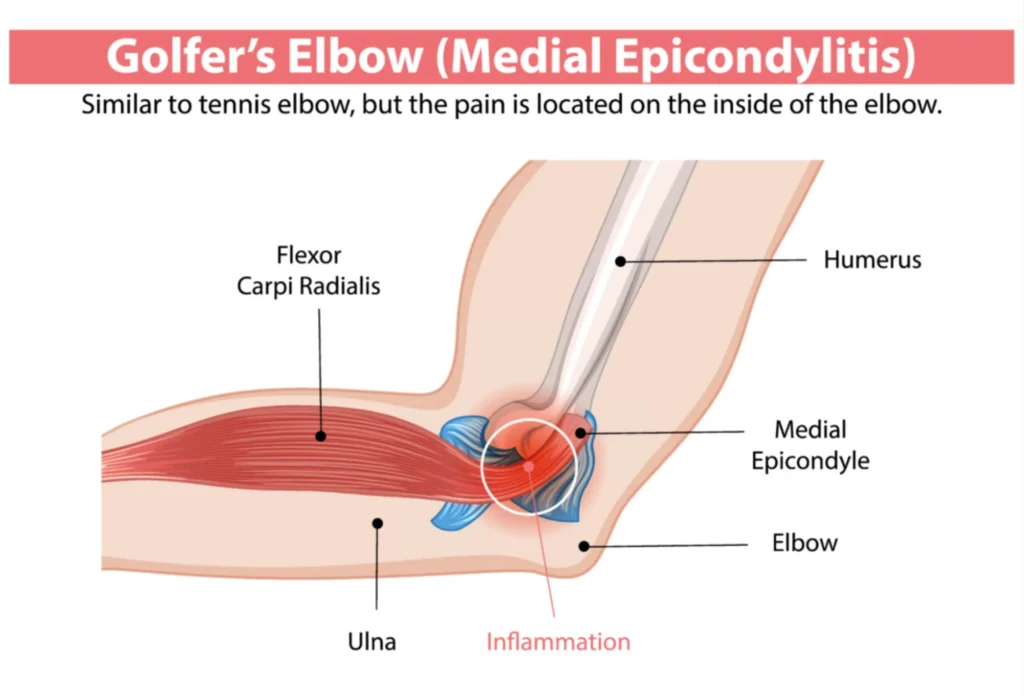
Golfer’s elbow is the common name for a condition called medial epicondylitis. It involves irritation or degeneration of the tendons that attach to the medial epicondyle, the small bony bump on the inside of your elbow. These tendons connect to the forearm muscles that flex your wrist and fingers. When those movements happen repeatedly, or with more force than the tendons can handle, small tears develop in the tissue over time, eventually causing pain and stiffness.
Unlike a sudden traumatic injury, golfer’s elbow tends to develop gradually. Many patients struggle to pinpoint exactly when it started. One day there’s a little soreness that seems easy to ignore, and then weeks or months later, that soreness becomes difficult to push through. It may start affecting daily tasks, making it uncomfortable to grip a mug, turn a doorknob, or type at a keyboard.
Despite its name, golfer’s elbow is remarkably common among people who have never touched a golf club. Construction workers, painters, plumbers, rock climbers, and tennis players all can develop it.
What Causes Golfer’s Elbow?
The underlying cause is repetitive stress on the forearm tendons. When those tendons get overloaded repeatedly without adequate recovery time between sessions, microscopic tears can form in the tissue. Over time, those tears may accumulate and lead to degenerative changes in the tendon that produce the characteristic inner elbow pain.
Some of the most common contributing factors include:
- Repetitive gripping tasks like using hand tools, typing heavily, or swinging a racket
- Lifting with improper form or heavier loads than the tendons can comfortably manage
- Sports involving throwing motions, such as baseball, softball, or javelin
- Golf, especially when swing mechanics place excessive stress on the inner elbow
- Prolonged use of vibrating tools like jackhammers or power drills
Other risk factors may include age, inadequate warm-up before activity, sudden increases in workout intensity, and prior elbow injuries that may have weakened the surrounding tissue.
Recognizing the Symptoms
The most recognizable feature of golfer’s elbow is pain and tenderness on the inside of the elbow. The discomfort often radiates down the forearm toward the wrist, and for some patients, it extends into the hand. Morning stiffness in the elbow joint is also common, particularly after periods of rest or inactivity.
Certain movements tend to make symptoms worse. Gripping objects, flexing the wrist, shaking hands, or performing a throwing motion may all trigger or intensify the pain. Some patients also notice weakness in the hand or wrist, making it harder to hold objects firmly or perform fine motor tasks that would normally feel effortless.
In some cases, patients experience tingling or numbness in the ring and little fingers. This symptom is worth flagging to your doctor, as it may suggest involvement of the ulnar nerve, which runs along the inner elbow. A condition called cubital tunnel syndrome can overlap with or mimic golfer’s elbow, which is one more reason why an accurate diagnosis matters.
Getting a Diagnosis
If experiencing persistent symptoms, visiting an experienced orthopedic specialist can be a good starting point. During the exam, your provider will likely press on the medial epicondyle to check for tenderness and ask you to perform specific movements, such as resisting wrist flexion, to see whether they reproduce your pain.
Imaging studies like X-rays or an MRI may be recommended in some cases, particularly if the diagnosis isn’t clear from the exam or if the provider wants a better picture of the tendon involvement. Getting an accurate diagnosis early tends to pay off. Different elbow conditions can produce overlapping symptoms, and starting with the right treatment approach from the beginning can save a significant amount of time.
How to Fix Golfer’s Elbow Fast: Treatment Options
Let’s get into the heart of the matter. If you’re trying to figure out how to fix golfer’s elbow fast, it’s important to understand upfront that ‘fast’ is relative. That said, starting the right treatments early can meaningfully shorten your recovery, and some patients begin to feel noticeably better within a few weeks.
Rest and Activity Modification
This step sounds simple, but it may be one of the most important. Continuing to push through pain tends to delay healing and can make the condition worse over time. That doesn’t mean stopping all activity; it means identifying the specific movements or tasks that aggravate your elbow and temporarily scaling them back.
Even small adjustments can make a meaningful difference. Changing your grip, using lighter tools, taking a short break from a sport, or modifying your swing technique may give the tendons the breathing room they need to start recovering.
Ice and Anti-Inflammatory Medications
Applying ice to the inner elbow for 15 to 20 minutes at a time, several times a day, may help manage pain and swelling, especially during flare-ups or in the earlier stages. Over-the-counter anti-inflammatory medications like ibuprofen or naproxen may also provide short-term relief for some patients. Check with your doctor before starting any medication, particularly if you have other health conditions.
Bracing
A counterforce brace, sometimes called a forearm strap, can be a surprisingly effective tool for managing golfer’s elbow. It works by redistributing stress away from the injured tendon, reducing the load on the medial epicondyle during repetitive activities. Many patients find they can stay more functional during their recovery when they wear one consistently. Your doctor can guide you toward the right type of brace and ensure the fit is correct for your anatomy and activity level.
Physical Therapy and Stretching
Physical therapy can be a strong tool in the golfer’s elbow recovery toolkit. A skilled physical therapist will guide you through a progressive program of stretching and strengthening designed to rebuild tendon capacity gradually, without overloading the injured tissue.
Eccentric strengthening exercises tend to play a particularly important role in tendon rehabilitation. These involve slowly lowering a weight through the range of motion controlled by the affected tendon, training the tissue to handle load more effectively over time.
The key with physical therapy is consistency. Tendon tissue adapts slowly, but patients who commit to the program tend to see lasting improvement that holds up over time, rather than cycling through repeated flare-ups.
Platelet-Rich Plasma (PRP) Injections
PRP therapy has attracted growing interest as an option for patients with chronic tendon conditions, including persistent golfer’s elbow. The procedure involves drawing a small amount of your own blood, spinning it to concentrate the platelets and growth factors, and injecting that concentrate into the injured tendon area. The goal is to support the body’s natural healing response.
When Might Surgery Be Necessary?
Surgery for golfer’s elbow is relatively uncommon. The majority of patients find meaningful relief through conservative care, though it may take several months of consistent effort. When symptoms persist despite a full course of rest, bracing, physical therapy, and injections, surgical options may be worth exploring.
Surgical procedures generally involve removing damaged tendon tissue and repairing or reattaching healthy tissue to the bone. After surgery, rehabilitation carefully balances immobilization with early movement to keep the elbow from becoming stiff.
Preventing Golfer’s Elbow from Coming Back
Once you’ve worked through the recovery process, keeping golfer’s elbow from returning is worth some proactive attention. A few habits may help lower your risk:
- Warm up thoroughly before activity, especially anything involving repetitive arm or wrist movements
- Keep your forearm muscles strong even during pain-free periods
- Use proper technique in sports or physical work; a coaching session or ergonomic review can make a meaningful difference
- Avoid sudden increases in activity intensity or duration that could overwhelm tendon tissue that isn’t yet fully conditioned
- Choose equipment (rackets, clubs, tools) that fit your body appropriately and don’t place unnecessary strain on the medial elbow
Summary
Golfer’s elbow is a challenging condition, but it’s one that responds well to the right treatment plan. If you’ve been trying to figure out how to fix golfer’s elbow fast, the most important step is simply getting started with an accurate diagnosis and a structured, consistent treatment approach. Most cases improve meaningfully with conservative care, though some patience is required. Surgery is available for persistent cases, but the majority of patients don’t end up needing it.
Frequently Asked Questions
How long does golfer’s elbow typically take to heal?
Recovery timelines vary considerably depending on severity, how long symptoms have been present, and how consistently treatment is applied. Many patients begin to see noticeable improvement within a few weeks to a couple of months of dedicated conservative care. More severe cases may take six months or longer.
Can I keep working or playing sports while I have golfer’s elbow?
It depends on the nature and severity of your symptoms. In some cases, modifying your technique or reducing the intensity of an activity may allow you to stay active without significantly worsening the condition. In others, taking a brief break from the aggravating activity is the right call. Your doctor can help determine what’s appropriate given your specific diagnosis and goals.
Is golfer’s elbow the same as tennis elbow?
They’re related but distinct conditions. Golfer’s elbow (medial epicondylitis) affects the tendons on the inside of the elbow, while tennis elbow (lateral epicondylitis) involves tendons on the outside. Both develop from repetitive overuse, but the muscles involved and the movements that aggravate each condition differ. Treatment approaches are similar in some ways, but they’re not interchangeable.