Gout is a form of inflammatory arthritis that can cause sudden attacks of pain, swelling, and tenderness in the joints. While it most commonly affects the joint at the base of the big toe, gout can occur in nearly any joint in the body. Understanding the symptoms of gout in elbow can be helpful for early diagnosis and effective management.
Key Takeaways
- Gout results from the buildup of uric acid in the blood, leading to the formation of sharp, needle-like urate crystals that deposit in the joints and surrounding tissues.
- The primary symptoms of gout in elbow include the rapid onset of intense pain, swelling, redness, and warmth over the affected area.
- Acute flares may be managed with anti-inflammatory medications, while long-term treatment focuses on lowering uric acid levels to prevent future attacks and joint damage.
The Underlying Mechanism of Gout
Gout occurs when the body either produces too much uric acid or the kidneys do not excrete enough of it. Uric acid is a natural waste product resulting from the breakdown of purines, which are substances found naturally in the body and in certain foods.
When uric acid levels in the blood become too high, a condition known as hyperuricemia develops. This excess uric acid can then crystallize. These microscopic crystals, called monosodium urate crystals, can deposit in the joints, tendons, and surrounding soft tissues. The body’s immune system recognizes these crystals as foreign invaders, triggering an inflammatory response.
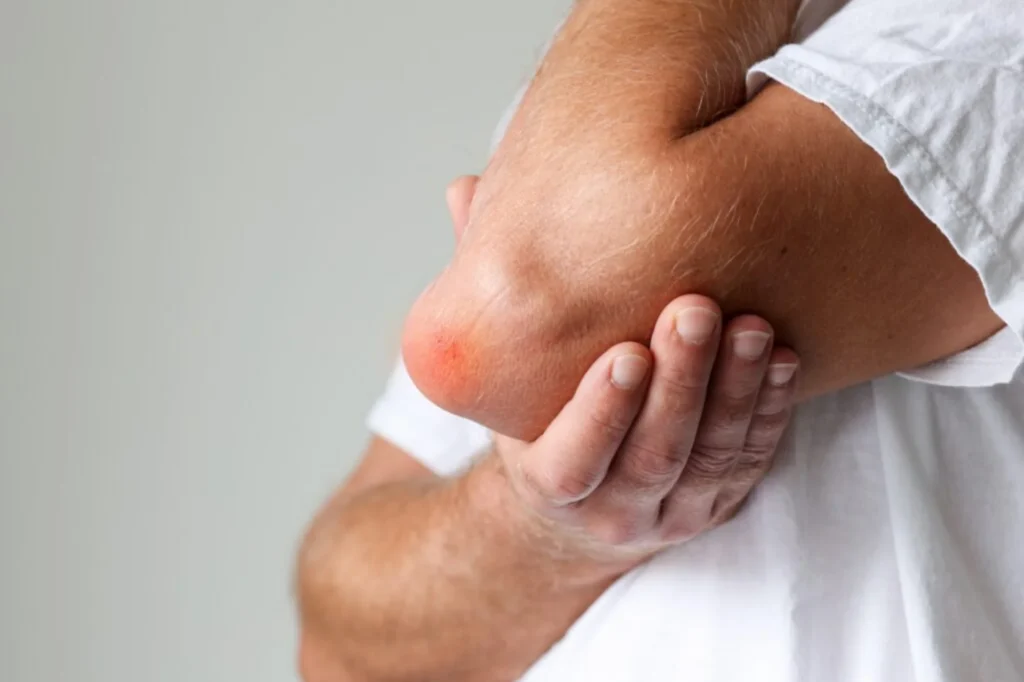
The elbow joint, while not the most common target, is still susceptible to urate crystal deposition. Gout can affect nearly any joint in the body, most often the big toe, but it may also involve larger joints such as the elbow or shoulder (gout in the shoulder). In the elbow, inflammation may affect the joint itself (gouty arthritis) or the olecranon bursa at the back of the elbow, leading to gouty olecranon bursitis.
Recognizing the Acute Symptoms of Gout in Elbow
The onset of a gout flare is typically sudden, frequently beginning in the middle of the night or early morning. Patients may go from feeling perfectly fine to experiencing severe discomfort within a matter of hours. Recognizing the symptoms of gout in elbow can be the first step toward getting appropriate care.
Intense Pain
Significant Swelling
In the elbow, the pain is sometimes described as throbbing or burning. It can be so intense that even the slightest touch, such as the weight of a shirt sleeve or a bedsheet, becomes unbearable.
The affected elbow may become noticeably swollen. This swelling is a direct result of the intense inflammation and the accumulation of fluid in the joint space or the bursa. The volume of the swelling can limit the ability to fully bend or straighten the arm.
Redness and Warmth
The skin over the affected area may become visibly red or purplish. This erythema is another classic sign of the underlying inflammatory process. Furthermore, the area may feel warm to the touch. This localized heat is a direct consequence of increased blood flow to the inflamed tissue.
Limited Range of Motion
As the pain and swelling intensify, the patient’s ability to move the elbow joint can become restricted. The joint may feel stiff and locked, and any attempt to move it beyond a certain point may sharply increase the pain.
Gouty Olecranon Bursitis
When discussing the symptoms of gout in elbow, it is important to discuss the olecranon bursa. This small, thin sac is located between the skin and the bony tip of the elbow, known as the olecranon. Its function is to provide a cushion and allow the skin to slide smoothly over the bone during movement.
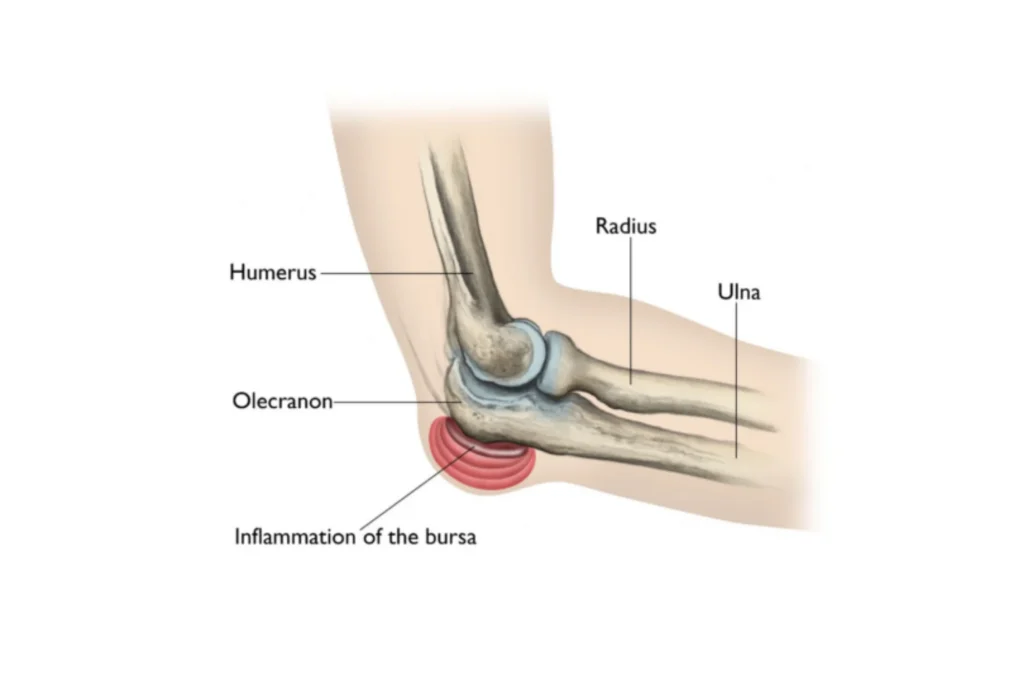
In the context of gout, the olecranon bursa is a common site for urate crystal deposition. When this happens, the bursa becomes inflamed, a condition known as olecranon bursitis.
The symptoms of gouty olecranon bursitis may include:
- Localized Swelling: The swelling is usually very well-defined and confined to the bursa itself, appearing as a soft, balloon-like lump at the point of the elbow.
- Less Joint Pain: Unlike true gouty arthritis of the elbow joint, the pain from bursitis may be less severe and may not limit the range of motion as much, unless the bursa is extremely large and tense.
- Skin Changes: The overlying skin is typically red, warm, and tender.
Chronic Gout and Tophi in the Elbow
If hyperuricemia is left untreated over many years, it can lead to a more persistent and damaging form of the condition known as chronic tophaceous gout. Tophi are deposits of urate crystals that form visible, hard lumps beneath the skin. In the elbow, tophi most commonly develop around the olecranon bursa or along the tendons. These deposits are usually painless initially, but they may cause problems over time.
Signs of Chronic Gout in the Elbow
- Visible Lumps (Tophi): These are firm, irregular nodules that can range in size from a small pea to a large mass. They are often found on the back of the elbow.
- Skin Ulceration: In severe, long-standing cases, the skin over a tophus may break down, leading to a chalky, white or yellowish discharge of urate material. This can increase the risk of infection.
- Chronic Joint Damage: If the urate crystals deposit within the joint itself, they can cause progressive erosion of the cartilage and bone.
- Nerve Compression: Large tophi near the elbow can potentially compress nearby nerves, such as the ulnar nerve, leading to symptoms like numbness, tingling, or weakness in the hand and fingers.
The Diagnostic Process for Elbow Gout
When a patient presents with classic symptoms of gout in elbow, an experienced elbow specialist may follow a structured process to confirm the diagnosis and guide treatment. The goal is to not only confirm the presence of gout but also to rule out other conditions.
1. Medical History and Physical Exam
Your doctor may ask detailed questions about the onset of the symptoms, their severity, and any previous episodes of joint pain. They may also inquire about diet, alcohol consumption, medications, and any family history of gout. During the physical exam, the elbow may be inspected for swelling, redness, and warmth.
2. Joint Fluid Aspiration (Arthrocentesis)
In this test, the doctor uses a sterile needle to draw a small sample of fluid from the affected joint or bursa. The fluid sample is then sent to a laboratory for analysis. Under a polarized light microscope, the lab technician can identify urate crystals. The presence of these crystals definitively confirms the diagnosis of gout. The fluid may also be tested for white blood cell count and the presence of bacteria to rule out septic arthritis.
3. Blood Tests and Imaging
Blood tests may be used to measure the level of uric acid in the blood. While a high uric acid level (hyperuricemia) can suggest gout, it is important to note that a patient can have a gout attack even if their uric acid level is normal during the flare. Conversely, many people with hyperuricemia never develop gout.
Imaging tests including X-rays, MRI, and ultrasound may be used for added information on the gout and to help rule out other conditions.
Managing the Acute Gout Flare in the Elbow
Once the diagnosis of gout in the elbow is confirmed, treatment focuses on two main goals: rapidly relieving the pain and inflammation of the acute attack, and then preventing future attacks.
Immediate Relief for the Acute Attack
The following medications are commonly used to help manage a gout flare:
- Nonsteroidal Anti-Inflammatory Drugs (NSAIDs): NSAID medications work by reducing inflammation and pain.
- Colchicine: This medication interferes with the inflammatory response to the urate crystals.
- Corticosteroids: These powerful anti-inflammatory drugs may be taken orally or injected directly into the affected joint or bursa.
Home Care Strategies
Patients may be advised to take several steps at home to manage the discomfort:
- Rest and Elevation: Resting the affected elbow and keeping it elevated above the level of the heart may help reduce swelling.
- Ice Application: Applying ice packs wrapped in a towel to the elbow for 20-minute intervals several times a day may help numb the pain and decrease inflammation.
- Hydration: Drinking plenty of water may help the kidneys flush out uric acid, though this will not typically stop an acute flare.
Long-Term Management: Preventing Future Flares
The long-term goal is to maintain a serum uric acid level below the saturation point for urate crystals, to dissolve existing crystals and prevent new ones from forming. This is generally achieved through lifestyle modifications and medication.
Urate-Lowering Therapy (ULT)
- Xanthine Oxidase Inhibitors (XOIs): These medications reduce the body’s production of uric acid.
- Uricosurics: Medications like this help the kidneys excrete more uric acid.
- Pegloticase: This is a medication often reserved for patients with severe, chronic gout that has not responded to other treatments. It works by converting uric acid into a substance that is excreted by the body.
Lifestyle and Dietary Adjustments
- Dietary Purine Reduction: Limiting the intake of high-purine foods, such as red meat, organ meats (liver, kidney), and certain seafood (anchovies, sardines), can help lower uric acid levels.
- Avoidance of High-Fructose Corn Syrup: Sugary drinks and foods sweetened with high-fructose corn syrup have been linked to increased uric acid production and gout risk.
- Alcohol Moderation: Beer and spirits have been linked to a higher risk of gout flares.
- Hydration: Consistent and adequate water intake helps promote uric acid excretion.
Summary
Gout in the elbow occurs when excess uric acid forms sharp crystals that trigger sudden inflammation in the joint or olecranon bursa. This often leads to the rapid onset of severe pain, swelling, redness, warmth, and limited motion. In some cases, chronic crystal buildup can form hard lumps called tophi around the elbow. Diagnosis typically involves joint fluid analysis and imaging, while treatment focuses on reducing pain during flares and lowering uric acid levels long-term to prevent future attacks.
Frequently Asked Questions
How long does a gout flare in the elbow typically last?
An untreated gout flare can last anywhere from a few days to several weeks. With prompt and appropriate medical treatment, intense pain and inflammation usually begin to subside within a couple of days. The joint may still feel tender and slightly swollen for a week or more.
Is gout in the elbow more common in men or women?
Gout is more common in men. Higher estrogen levels in women appear to help clear uric acid from the body, which offers some protection before menopause.
What should I do immediately if I suspect I have a gout flare in my elbow?
If you suspect a gout flare, it may help to immediately rest the elbow, elevate it, and apply ice. Consider contacting your doctor or orthopedic specialist as soon as possible. It is not recommended to wait for the pain to become unbearable before seeking medical attention.